Creating and Monetizing an AI-Powered Virtual Influencer: A 30-Day Blueprint
Building an AI-powered virtual influencer sounds easy until you try to make it credible enough for audiences to follow and brands to pay for. Most projects stall at the avatar stage: the visuals may look polished, but the account lacks a clear niche, a repeatable content system, and a practical path to revenue.
That matters because brands do not pay for novelty alone. They look for audience fit, consistent content, strong execution, and low risk. If your virtual persona cannot explain who it serves, why people should care, and how it connects to a commercial category, it remains a creative experiment instead of becoming a real media asset.
This guide lays out a practical 30-day path from concept to early monetization readiness. Not overnight fame, and not guaranteed income. The goal is to help you launch, test, package, and prepare for your first revenue opportunity.
What this plan helps you achieve
By the end of 30 days, the goal is not to go viral. It is to have:
- A niche-specific persona with a clear value proposition
- A consistent identity and disclosure approach
- 10 to 20 strong posts built around repeatable formats
- Early traction signals that matter more than follower count
- A simple media kit and starter offer
- A realistic first path to revenue
Who this blueprint is for
This is for creators, solo marketers, founders, and small agencies who want to build a virtual influencer with a business case behind it.
It assumes you are beginner to intermediate, willing to publish consistently for a month, and comfortable using AI tools with human review. It does not assume you already have a large audience.
Why most virtual influencer projects fail to monetize
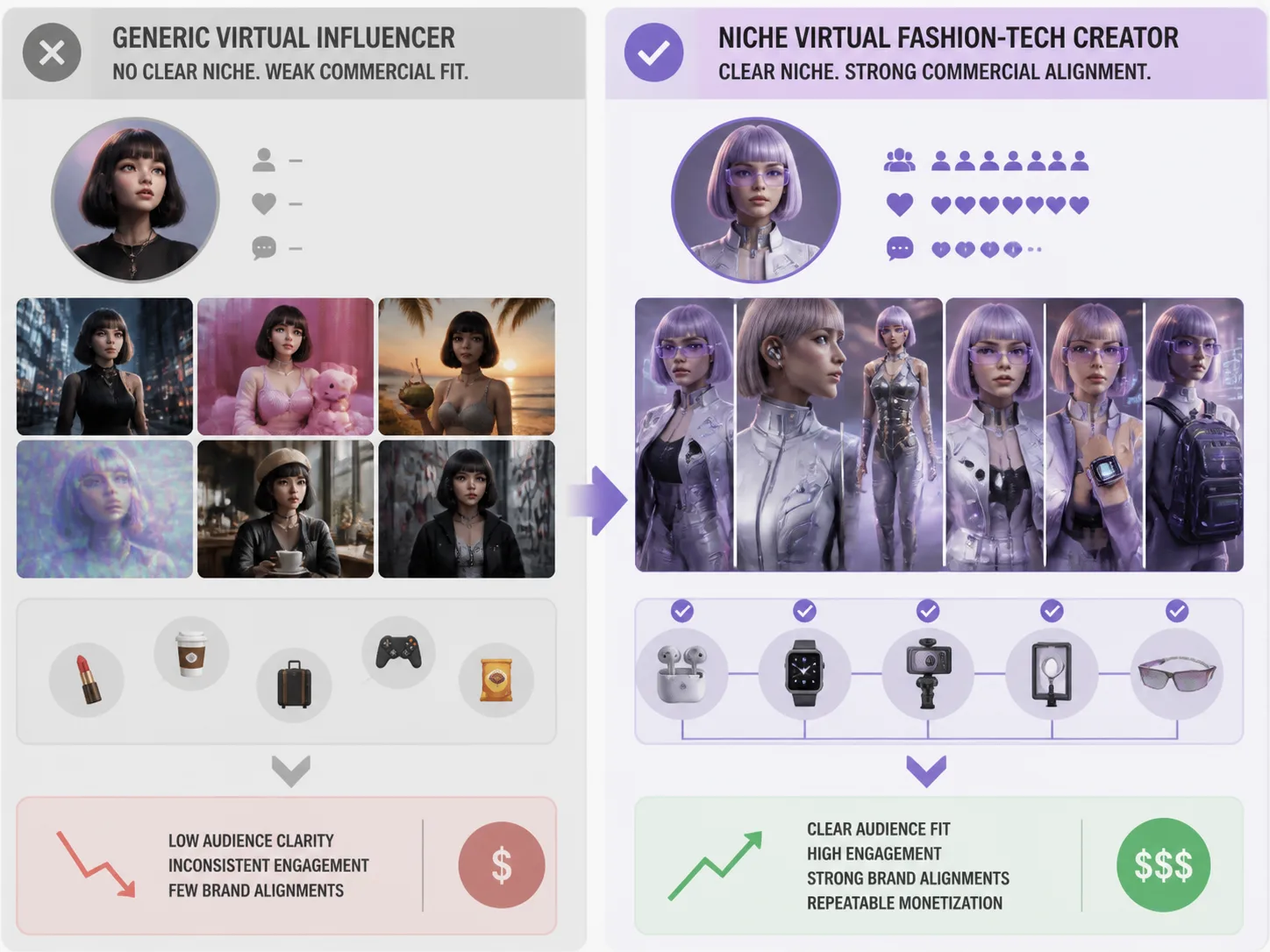
The common mistake: building the character before the business model
A polished avatar is not a business model.
A generic account posting stylish AI-generated images may get curiosity clicks, but it is difficult to monetize if nobody can quickly answer:
- Who is this for?
- What does this account help people do or feel?
- Which product categories fit naturally?
- Why would a brand trust it?
Compare these two positions:
- Weak: “AI girl posting aesthetic city shots”
- Strong: “Virtual fashion-tech creator helping Gen Z creators find affordable futuristic looks”
The second is easier for both audiences and advertisers to understand.
What brands actually buy
Brands rarely buy follower count by itself. They buy:
- A defined audience
- Content that fits their category
- Consistent publishing
- Professional communication
- Low reputational risk
If your character changes appearance every week, shifts tone constantly, or hides that it is synthetic, the account becomes harder to trust.
What success looks like in the first 30 days
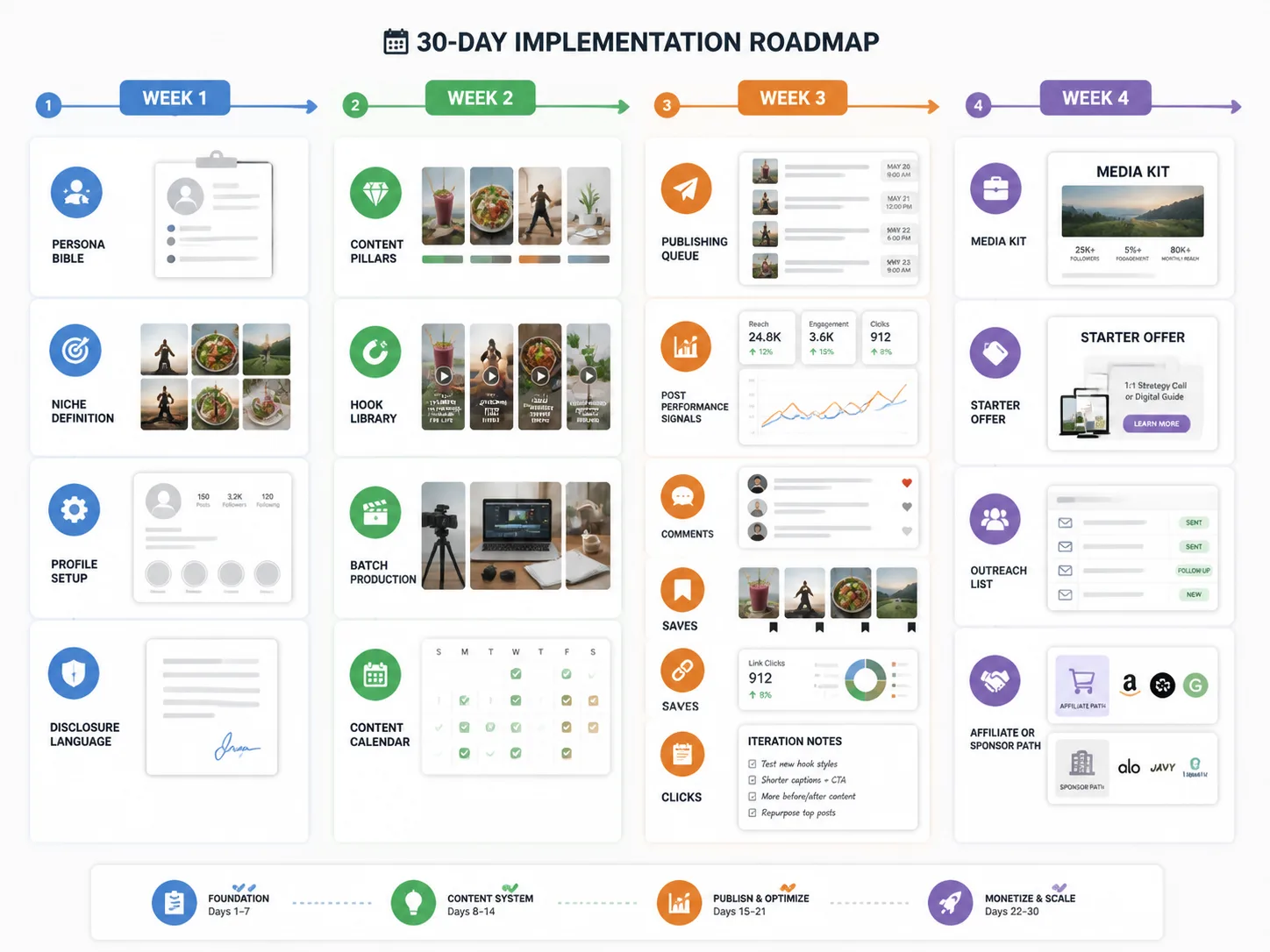
In month one, success means proving direction, not achieving scale.
Bottom Line: If you reach day 30 with a clear niche, consistent content, early engagement patterns, and a basic monetization package, you are already ahead of most abandoned projects.
Start with the business model, not the avatar
Three realistic monetization paths
| Monetization path | Best for | Strength | Limitation |
|---|---|---|---|
| Sponsorships | Brand-friendly niches with strong visual content | Higher upside per deal | Slower for new accounts |
| Affiliate revenue | Product-led niches with clear buying intent | Fast to test | Requires trust and clicks |
| Owned offers | Creators who want more control and margin | Not dependent on brand approval | Harder when audience value is unclear |
For most new accounts, affiliate revenue or a simple digital offer is more realistic than waiting for inbound sponsorships.
How to choose a niche brands understand quickly
Choose a niche where these three things overlap:
- Brands already spend money
- The audience shows visible buying intent
- The content can stay consistent over time
Good starting categories include fashion, beauty, wellness, fitness accessories, creator tools, gaming, home decor, and travel gear.
Be more cautious in regulated or trust-sensitive categories such as medical advice, legal advice, or investing.
Pick one primary platform and one support channel
If the persona is highly visual, start with:
- Primary: Instagram or TikTok
- Support: a landing page or email capture
Instagram helps shape brand perception and portfolio quality. TikTok is useful for discovery and testing hooks. The support channel matters because it gives you an asset you own beyond platform algorithms.
Decision Rule: One main platform and one support channel is usually better than trying to publish everywhere in month one.
The VIBE framework for a monetizable virtual influencer
Random execution creates random results. A simple system helps you stay focused.
The VIBE framework
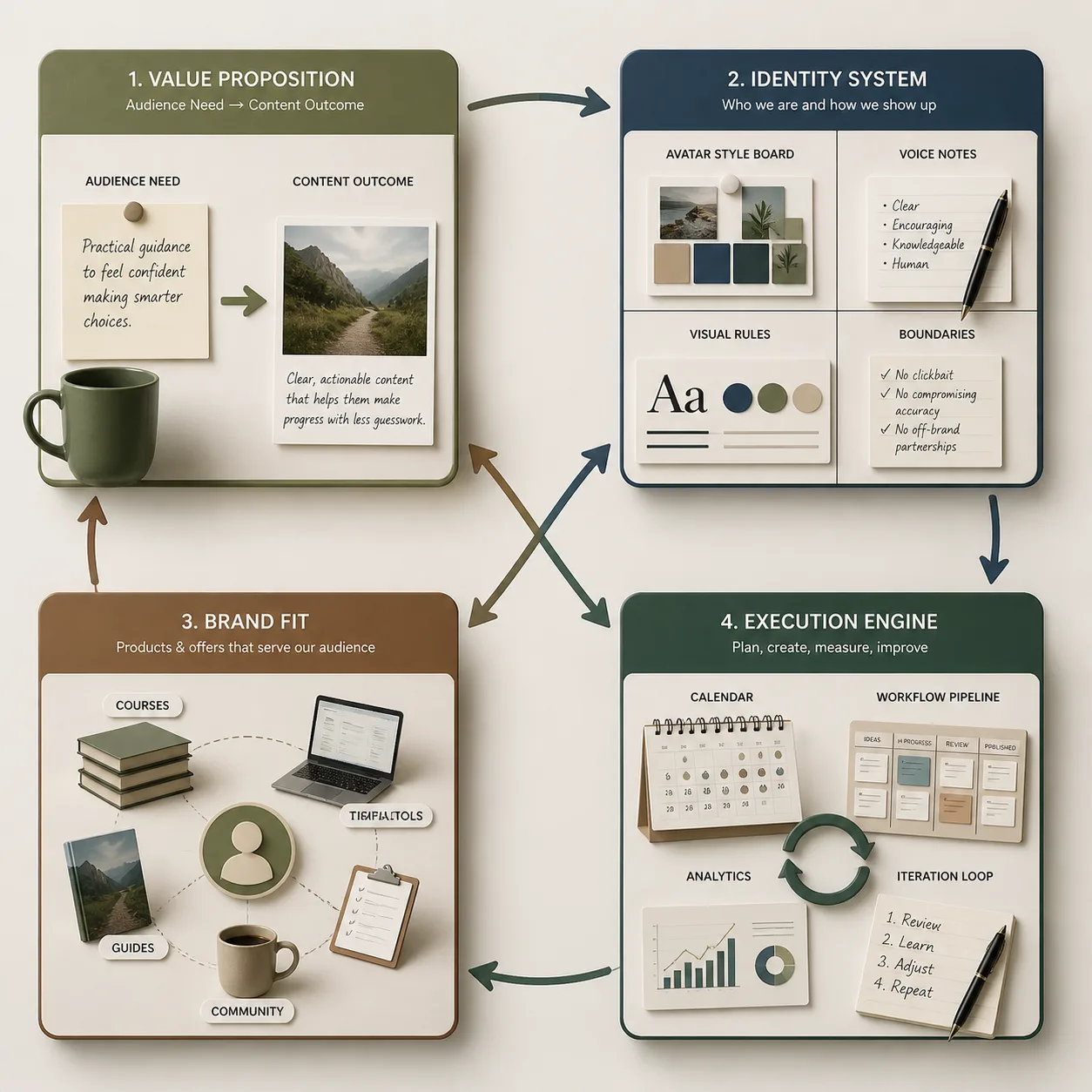
| Element | Meaning | Why it matters | Where it fails |
|---|---|---|---|
| V — Value proposition | Why someone follows the persona | Creates audience pull and content focus | Fails when the account is only aesthetic |
| I — Identity system | Voice, visuals, niche, boundaries, backstory | Keeps output consistent across tools | Fails when prompts drift |
| B — Brand fit | Product categories that match naturally | Makes monetization feel obvious | Fails when the niche is too broad |
| E — Execution engine | Workflow, publishing cadence, measurement, iteration | Turns ideas into a repeatable asset | Fails when production is too complex |
Example: a virtual fashion-tech creator
A stronger example persona might:
- Help creators style affordable wearable tech
- Share “futurewear” outfit ideas
- Review smart accessories
- Comment on AI and fashion trends
- Fit advertiser categories like earbuds, smartwatches, creator gear, and fashion accessories
That is much easier to monetize than a generic lifestyle avatar with no commercial direction.
Days 1–7: Build the character and position it in the market
Define the audience outcome
Start with one sentence:
This account is for [audience] who want [outcome] through [lens].
Example:
This account is for style-conscious creators who want affordable futuristic outfits and wearable-tech inspiration.
That sentence should guide every content decision.
Create a persona bible
Your persona bible is the operating system for the character. Include:
- Niche and target audience
- Tone of voice
- Recurring themes
- Color palette and visual rules
- Wardrobe or styling logic
- Caption style
- Values and boundaries
- No-go topics
- Disclosure approach
Without this, the persona will drift across tools and prompts.
Set up branding assets and disclosure language
At minimum, prepare:
- Handle and profile image
- Bio with a clear niche statement
- Two or three pinned starter posts
- Link in bio to a landing page or contact form
- Simple disclosure language
Example:
Virtual creator powered by AI. Content is curated and managed by a human team. Sponsored and affiliate content disclosed where applicable.
If you operate in the U.S., review FTC guidance on endorsements and affiliate disclosures before running paid campaigns.[^1] Also check platform rules around synthetic or manipulated media, since enforcement and expectations can vary.[^2]
Days 8–14: Build the content system before posting heavily
Create 3 to 5 repeatable content pillars
For the fashion-tech example, pillars could include:
- Futurewear outfit breakdowns
- Wearable gadget styling
- AI and fashion commentary
- Behind-the-scenes persona logic
- Audience polls and look ratings
Three to five pillars is usually enough. More than that often creates confusion.
Plan a two-week content calendar
Your calendar should define:
- Hook
- Format
- Visual treatment
- CTA
- Goal
| Post type | Example hook | Format | CTA | Goal |
|---|---|---|---|---|
| Intro | “I style wearable tech so it looks intentional, not awkward.” | Reel | Follow for futurewear looks | Positioning |
| Value | “3 affordable smart accessories that actually improve an outfit” | Carousel | Save this list | Saves and clicks |
| Opinion | “Most futuristic fashion content ignores wearability” | Short video | Comment if you agree | Personality proof |
| Interaction | “Pick tomorrow’s look: chrome minimal or neon utility?” | Story or poll | Vote | Engagement |
Use AI for speed, not for sameness
AI is useful for:
- Idea generation
- Draft scripts
- Visual concepts
- Repurposing
Human judgment is still best for:
- Taste
- Niche judgment
- Final edits
- Brand safety
- Deciding what not to publish
Common Mistake: Over-automating the account until every post feels polished but forgettable. People do not follow polish alone. They follow specificity.
Days 15–21: Publish, test, and look for real traction
What to post first
Your first set of posts should include:
- An intro post
- A proof-of-personality post
- A proof-of-value post
- An audience interaction post
- A repeatable series post
This gives people a reason to understand the persona, follow it, and come back.
Measure more than follower growth
In the first month, watch:
- Saves
- Shares
- Watch time
- Profile visits
- Comment quality
- DMs
- Repeat viewers
- Link clicks
A small audience asking, “Where can I buy that?” is often a stronger monetization signal than a bigger audience leaving emoji comments.
Adjust based on response
If comments show confusion, your positioning is still weak.
If one format gets more saves and shares, turn it into a series.
If visuals perform but nobody clicks, comments, or asks questions, the account may look good without creating commercial value.
Days 22–30: Prepare for monetization
Build a simple media kit
Your starter media kit should include:
- Persona summary
- Audience profile
- Platform metrics with context
- Best-performing posts
- Available content formats
- Collaboration options
- Disclosure and brand-safety note
- Contact details
For small accounts, clarity matters more than raw scale.
Create a starter offer
A realistic first offer might include:
- One short-form video featuring the product
- Three supporting story frames
- 30-day organic usage rights
- Optional affiliate link
This is easier for a small brand to test than a larger campaign.
Pitch brands with a low-risk offer
Keep outreach short and practical.
Hi [Brand], I run a virtual fashion-tech creator account focused on helping style-conscious creators discover wearable tech that looks good on camera. I think your [product] fits naturally with the audience and content style. I’d love to propose a small test: one short-form video and three story frames, with clear disclosure and simple approval steps. Happy to share examples and current engagement data.
If brand deals are too early, test other revenue paths
If sponsorships are premature, try:
- Affiliate links
- Curated storefronts
- Digital guides or templates
- Lead generation for a service
- UGC-style creative packages using the persona format
If you already have a landing page and offer, paid distribution can help test messaging. Some creators use services like Traffics.io to send targeted traffic to a landing page or promotional asset and measure response before investing more in outreach. The goal is not to inflate growth. It is to learn whether the offer converts.
What a first brand deal usually requires
Minimum proof points
Brands want enough evidence to trust that you can deliver reliably.
That usually means:
- A clear niche
- Consistent visuals
- A regular posting pattern
- Strong engagement quality
- Clear disclosure practices
- Professional communication
How small brands assess risk
Smaller brands often care less about celebrity-scale reach and more about:
- A fresh creative angle
- Strong category fit
- An affordable test budget
- Confidence that the account will not create trust issues
A low-friction first collaboration
A common first deal structure looks like this:
- Gifted product or small fixed fee
- One Reel or TikTok
- One revision round
- Clear approval timeline
- Basic disclosure language
- Limited usage rights unless expanded
That keeps risk low on both sides.
Common mistakes that make monetization harder
Inconsistent visuals and personality drift
If the character’s face, tone, or values change every week, trust drops quickly.
Weak disclosure
Trying to pass the persona off as fully human creates unnecessary audience and brand risk.
Targeting too many niches
A fashion post, then finance tips, then travel memes is not range. It is confusion.
Posting without a conversion path
Content without a CTA, offer, link strategy, or monetization hypothesis rarely compounds.
Decision Rule: Before increasing output, make sure each post supports one of three goals: audience clarity, engagement depth, or monetization learning.
Tools, workflows, and operating limits
Where AI helps most
Organize your workflow by stage:
- Research and ideation
- Script and caption drafting
- Image or video generation
- Editing and repurposing
- Scheduling and analytics
- Asset storage and prompt management
Choose tools based on:
- Consistency
- Licensing clarity
- Export quality
- Reusability
- Cost
Where human judgment matters most
You still need a human for:
- Niche selection
- Final creative taste
- Disclosure and ethics
- Community replies
- Brand-fit decisions
- Quality control
Time, cost, and quality tradeoffs
A solo creator can keep costs manageable by limiting channels and using repeatable formats. Costs rise quickly when you chase photorealism, custom voice, multi-platform publishing, and high-volume video.
30-day implementation checklist
Weekly milestones
| Week | Focus | Must-have output |
|---|---|---|
| Week 1 | Positioning and identity | Niche, monetization path, persona bible, bio, disclosure |
| Week 2 | Content system | 3 to 5 pillars, templates, two-week calendar, batch assets |
| Week 3 | Publishing and testing | First posts live, engagement tracking, iteration notes |
| Week 4 | Monetization readiness | Media kit, starter offer, outreach list, monetization test |
Go/no-go signals
Go if:
- Engagement quality improves
- The niche feels clear
- Content production is sustainable
- People ask buying-related questions
- At least one format shows repeatable traction
Pause or pivot if:
- The persona still feels generic
- Visual consistency is weak
- Comments show confusion
- No monetization angle feels natural
- Production takes too much time to sustain
Bottom line: build a media asset, not just a character
A virtual influencer becomes monetizable when it operates like a focused media property, not when it simply looks impressive. The real asset is the system: clear positioning, consistent identity, strong brand fit, and repeatable execution.
After day 30, the next step depends on the data. Scale content if a few formats clearly outperform. Increase outreach if your media kit and niche positioning are strong. Test paid distribution only after your messaging and offer show early signs of working.
If you treat the avatar as the product, progress stays fragile. If you treat the account as a business asset, you create multiple ways to monetize over time.
FAQ
How do I create a virtual influencer from scratch?
Start with the business model before the avatar. Choose a niche, define the audience outcome, pick one main platform, build a persona bible, create three to five content pillars, publish consistently, and package the account with a simple media kit and starter offer.
What should I do in the first 30 days?
Week 1 is for niche, monetization path, persona rules, bios, and disclosure. Week 2 focuses on content pillars, templates, and a two-week calendar. Week 3 is for publishing and measuring traction. Week 4 is for building a media kit, testing monetization, and starting outreach.
Do I need a large following to monetize?
No. A large following helps, but early monetization can happen with a small, focused audience if the persona is consistent, the niche is brand-friendly, and the content shows strong engagement quality.
What are the most realistic early revenue paths?
The most practical starting points are sponsorships, affiliate revenue, and owned offers. For new accounts, affiliate links or simple digital products are often faster to test than waiting for inbound brand deals.
How do virtual influencers make money?
They usually earn through sponsored posts, affiliate recommendations, paid creative collaborations, product seeding deals, digital products, storefront traffic, or by supporting a broader service or ecommerce business.
What do brands look for before offering a deal?
Brands usually want audience clarity, consistent visuals and personality, strong content quality, category fit, basic engagement proof, professional communication, and low reputational risk.
Which platform should I start with?
If the persona is highly visual, start with Instagram or TikTok and use a landing page or email capture as the support channel. One main platform plus one support asset is usually enough at the beginning.
What should be included in a persona bible?
Include the niche, audience, voice, values, tone, recurring themes, visual rules, color palette, wardrobe or styling logic, caption style, brand boundaries, and disclosure approach.
How do I keep the character consistent across AI tools?
Use one operating system for the character: fixed identity rules, visual references, approved prompts, and clear no-go boundaries. Review outputs manually before publishing so the persona does not drift.
Which metrics matter most in the first month?
Focus on saves, shares, watch time, profile visits, comment quality, DMs, repeat viewers, outbound clicks, and whether people respond to the niche-specific value. Follower count alone is a weak early signal.
What legal or ethical issues should I handle early?
Be transparent that the persona is virtual or AI-generated, review FTC endorsement and affiliate disclosure guidance if you operate in the U.S., check local advertising rules, confirm licensing and usage rights for assets, and review platform rules around synthetic media.
When is paid distribution useful for a new virtual influencer?
Paid distribution is most useful after you have a clear niche, a working offer, and a landing page or promotional asset to test. It should support learning and conversion testing, not fake traction.
[^1]: U.S. Federal Trade Commission guidance on endorsements and advertising disclosures. [^2]: Platform policies on synthetic or manipulated media may vary and change over time.