Meta Ads vs Google Ads: A Decision Framework Based on Intent, Offer Type, and Sales Cycle
Choosing between Meta Ads and Google Ads gets confusing when the comparison stays at the platform level. The real question is how people buy your offer.
If your budget goes into the wrong channel for the buyer’s actual decision process, the platform can look like the problem when the real issue is strategy. Some businesses need to capture demand that already exists. Others need to create interest before anyone thinks to search. Many need both.
This guide gives you a practical way to decide where to start, what to add next, and when a blended strategy becomes necessary. The framework is built around buyer intent, offer type, sales cycle, and creative capacity.
The decision is really about buyer intent
Why “which platform is better” is the wrong question
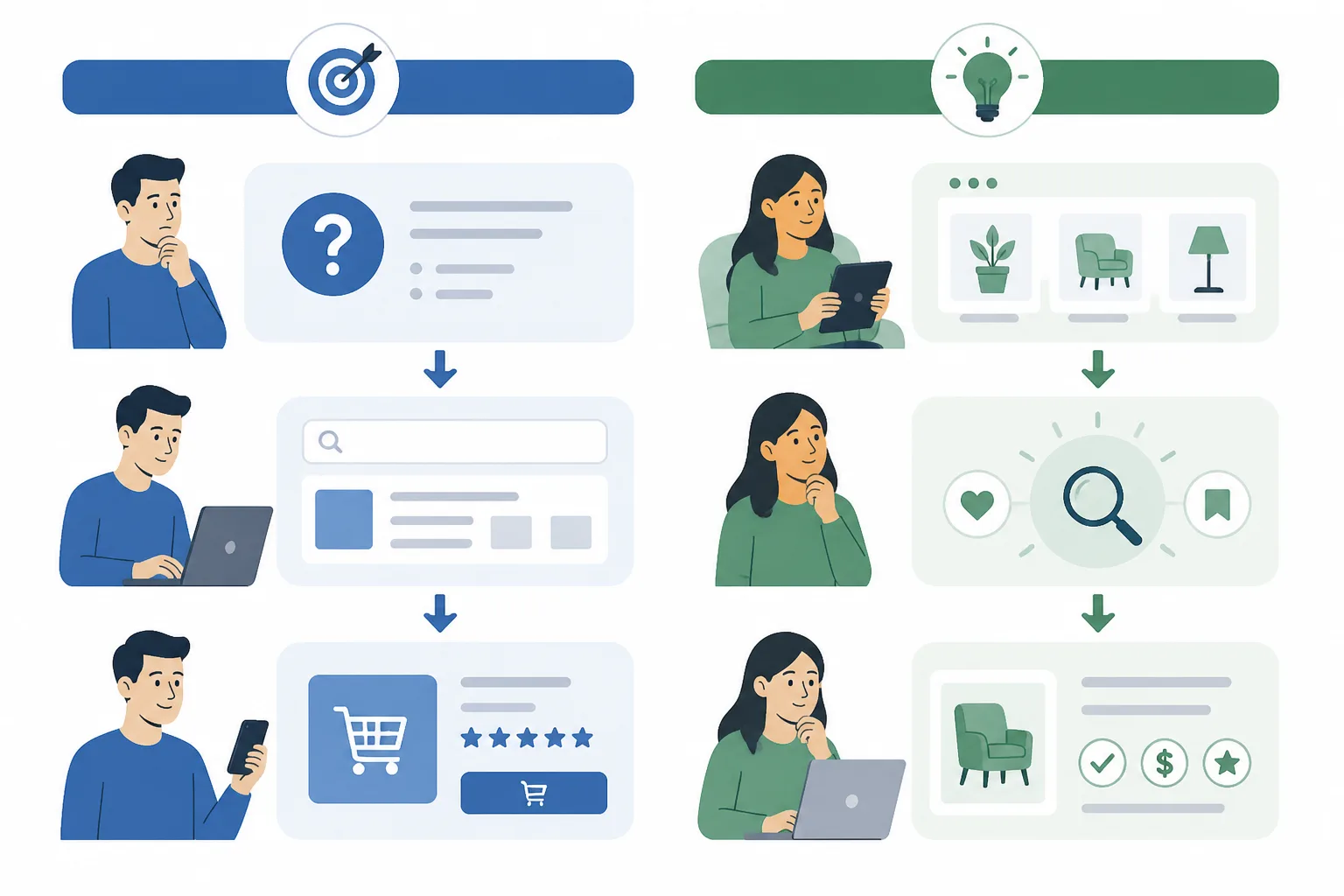
Meta Ads and Google Ads usually do not compete at the same moment in the buyer journey.
Google Ads works best when someone already knows they have a problem and is looking for a solution. Think “emergency plumber near me,” “best payroll software,” or “buy dog food online.” The intent is already there.
Meta Ads works best when that intent has not formed yet. People are scrolling, not searching. A strong ad creates interest, reframes a problem, or makes the offer feel relevant.
That is why claims like “Google converts better” or “Meta scales better” are too broad to be useful. They can be true in specific cases, but they are poor decision rules. The better starting point is buyer state.
The three variables that usually decide channel fit
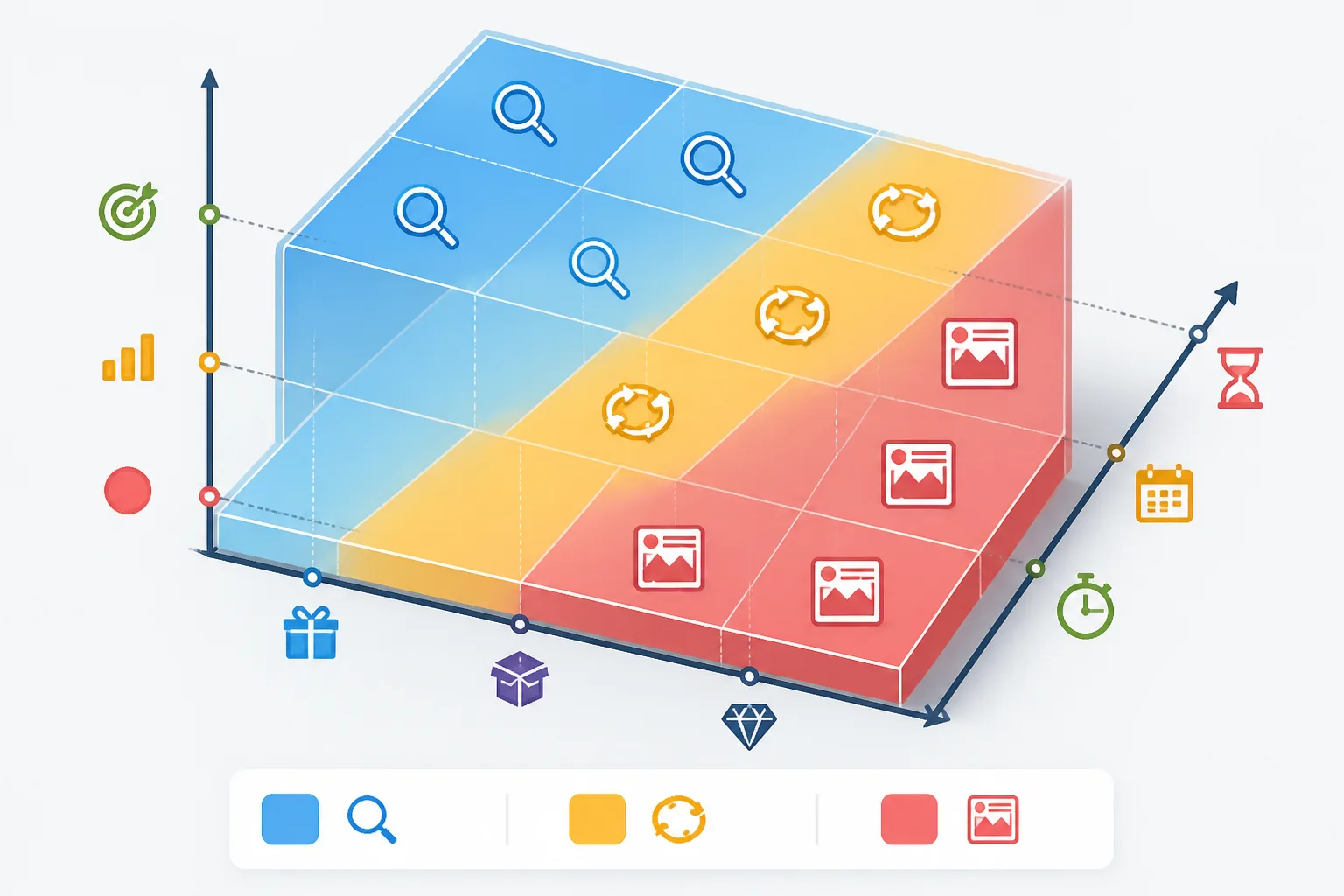
In practice, three factors drive most channel decisions:
- Intent: Are people actively looking for a solution?
- Offer type: Is the offer urgent, visual, obvious, novel, or trust-heavy?
- Sales cycle: Do people convert quickly, or do they need multiple touches?
There is also a fourth factor that gets overlooked: creative capacity.
Meta usually demands more from the creative side. You need fresh angles, strong hooks, proof, and enough testing volume to learn quickly. Google Search is less dependent on creative variety, but much more dependent on intent alignment, keyword structure, and landing page relevance.
A cosmetic dentist is a good example. It is a local service, so a simplistic take would say “use Google.” But cosmetic dentistry is not emergency plumbing. It is more visual, more trust-heavy, and more considered. Meta may shape interest earlier, even if Google captures the lead later.
The short version
If you want the fastest useful answer, start here:
- If buyers are searching now, test Google first
- If buyers are not searching yet, test Meta first
- If the sales cycle is longer or trust-heavy, expect to use both
- If you do not have a real creative system, be cautious with Meta
- If search demand is weak, be cautious with Google Search as your first channel
These rules will not cover every case, but they are more useful than generic platform rankings.
The core mental model: demand capture vs demand creation
What demand capture means
Demand capture means reaching people who already want something.
Google Search is the clearest example. A user types a query that reveals intent. Sometimes it is urgent, like “locksmith near me.” Sometimes it is commercial research, like “best CRM for small business.” In both cases, the platform responds to declared demand.
This works because the user has already crossed the motivation threshold. Your ad does not need to create desire from scratch. It needs to be relevant, credible, and easy to act on.
A local water damage company is a clear example. If water is leaking through the ceiling, the customer is not waiting to discover a social ad. They are searching for help immediately.
In practice, demand capture often includes:
- Google Search campaigns
- Google Shopping for product-specific demand
- Branded search
- Bottom-funnel category and competitor searches
What demand creation means
Demand creation means generating interest before someone starts searching.
Meta is strong here because the environment is built for discovery. A person may not know your product exists, may not fully understand the problem, or may not be in buying mode at all. The ad creates the opening.
This works best when the offer can be made compelling through message and creative. That might mean showing a transformation, surfacing a pain point, demonstrating the product in use, or framing the problem in a way that clicks immediately.
A skincare brand launching a visually strong product is a simple example. Few people wake up searching for something they have never heard of. But a feed ad with before-and-after imagery, a clear use case, and social proof can create demand quickly.
In practice, demand creation often includes:
- Facebook and Instagram feed ads
- Reels and Stories
- Short-form video explainers
- UGC-style ads
- Testimonial-led retargeting
Why Google usually wins when intent already exists
Google often wins when the buyer is already raising their hand.
The advantage is proximity to action. If someone searches “commercial cleaning service near me,” they are telling you three things at once: they want the service, they want it locally, and they may want it soon.
That signal reduces waste. Instead of persuading a broad audience, you are showing up for a smaller set of people who already look ready.
That is why Google often works well for urgent services, replacement services, and established categories. The user already has context. Search narrows the audience for you.
Why Meta often wins when attention has to be created first
Meta tends to win when the buyer needs to move from passive to interested.
That is common with:
- Visual ecommerce products
- Aspirational or identity-driven products
- Education-heavy offers
- New categories
- Trust-heavy but non-urgent services
Take a new productivity app for agency owners. If the category is unfamiliar, search volume may be weak. Even pain-point keywords may not convert well because buyers do not yet see the app as the answer. Meta can run founder-led videos that dramatize the problem, show the mechanism, and offer a low-friction next step like a demo or free trial.
The buyer was not searching, but now they are aware. That often shows up later as branded search, category search, direct traffic, or retargeting conversions.
Where this model oversimplifies
The demand capture vs demand creation model is useful, but it is still a simplification.
Google is not only a demand-capture platform. YouTube, Display, Demand Gen, and Performance Max can influence awareness and consideration. Meta is not only for top-of-funnel work. It can drive direct conversions, especially for ecommerce, retargeting, and lower-friction offers.
The model also gets weaker when:
- Search demand exists, but CPCs are too high to scale profitably
- A product is bought through both impulse and research
- Buyers move across channels over weeks or months
- Meta creative is weak, even though the offer is discovery-friendly
- Search volume is low, but the audience is valuable
Use the model as a guide, not a rulebook.
A simple decision matrix for choosing Meta, Google, or both
The most useful way to compare the two platforms is to score your business against four inputs. Call it the Intent-Offer-Cycle Matrix.
| Factor | Signals toward Google first | Signals toward Meta first | Signals toward both |
|---|---|---|---|
| Existing intent | People actively search for the solution | People are unlikely to search until persuaded | Some search exists, but awareness still shapes demand |
| Offer type | Urgent, obvious, replacement, known category | Visual, novel, aspirational, education-heavy | Trust-heavy, research-driven, multi-stage |
| Sales cycle | Short, immediate, low-touch | Discovery-led, emotionally triggered, low-to-medium friction | Medium or long cycle with multiple visits |
| Creative capacity | Limited creative resources | Strong creative testing and production ability | Good creative plus strong tracking and landing pages |
Axis 1: existing intent
Start with one question: Are buyers already looking?
If yes, Google should usually be tested first.
If no, Meta is often the better starting point because you need to create curiosity, desire, or problem awareness before search behavior appears.
A simple contrast makes this clear:
- Emergency plumber: intent is high and immediate
- Custom home office makeover service: some intent may exist, but much of the demand is latent and can be stimulated visually
Same broad market. Different buyer state.
Axis 2: offer type and problem awareness
Some offers are easy to search for because buyers already understand the problem and the solution. Others need education first.
Offers that often lean Google first:
- “I need this now” services
- Established software categories
- Product-specific searches
- Replacement purchases
- Bottom-funnel comparison searches
Offers that often lean Meta first:
- Novel products
- Aesthetic and lifestyle products
- Education-heavy services
- Offers with strong visual proof
- Products that create desire more than solve an immediate need
For example, “password manager for teams” has clear search behavior. A startup selling a new collaborative workflow method may not. The second offer usually needs framing before people search for it.
Axis 3: sales cycle length
Sales cycle changes channel economics.
If people convert quickly, the channel that captures existing intent often performs best. That is one reason Google dominates many short-cycle categories.
If conversion takes weeks or months, the picture changes. You may need one channel to create interest and another to harvest intent later. At that point, a blended strategy is not just tactical. It becomes structural.
A B2B software demo is a good example. A buyer might first see a Meta or YouTube ad, later visit the site, then search the brand a week later, then return through a competitor comparison search before booking. If you only look at the final click, Google gets all the credit. The actual journey is broader.
Axis 4: creative capacity
This is where many businesses misjudge platform fit.
Meta performance is tightly tied to creative quality and testing speed. If you cannot produce new hooks, angles, statics, videos, testimonials, and message variations, you may never give the platform enough to work with.
Google Search has its own demands, but they are different:
- Keyword-to-ad relevance
- Landing page alignment
- Offer clarity
- Conversion tracking quality
- Account structure and bidding logic
A business with a strong offer but no creative system may do better starting with Google, even if Meta looks attractive in theory. A DTC brand with a strong creative team may unlock Meta faster than search.
How to use the matrix without forcing certainty
The matrix is not meant to predict a winner with certainty. It is meant to improve your first decision and reduce obvious mismatch.
Some businesses sit between categories. A med spa is local, visual, trust-heavy, and consideration-based. That usually points to a mixed answer, not a clean one.
The best use of the matrix is simple:
- Choose the channel that best matches the current buyer state
- Validate with a focused test
- Add the second channel when the first reveals a bottleneck or a missing stage in the journey
That is usually better than splitting budget evenly and hoping both platforms sort it out.
When Google Ads is usually the better first choice
High-intent searches and urgent problems
Google is often the best first spend when the problem is urgent and the user is actively searching for a fix.
Examples include:
- Emergency plumbing
- Water damage restoration
- Locksmith services
- Towing
- Legal help after an accident
- HVAC repair
These are not discovery-led categories. The buyer does not need inspiration. They need access, trust, and speed.
If someone searches “24 hour locksmith near me,” the ad’s job is mostly to show relevance, location, and reliability.
Local services with immediate need
Local services are often Google-first when the need appears in real time.
Compare a burst pipe with a kitchen remodel. With a burst pipe, search is the event. With a remodel, inspiration and preference often happen before the quote request.
That is why geography alone does not decide the platform. Urgency plus search behavior matters more.
For a commercial cleaning company targeting office managers, searches like “commercial cleaning service near me” or “office cleaning company” signal active demand. Google can capture that efficiently if the landing pages match the search intent and service area.
Bottom-funnel lead generation
Google is also strong when the buyer is near a decision, even if the purchase is not urgent.
Examples:
- “best accounting software for contractors”
- “crm for insurance agents”
- “ISO 27001 consultant”
- “managed IT provider pricing”
These searches show commercial evaluation. The buyer already understands the category. The challenge is not awareness. It is selection.
Google works especially well here because you can align copy and landing pages to specific intent segments. Someone searching “pricing” needs a different experience from someone searching “best software.”
Offers with clear search behavior
Established demand is a major advantage.
If the market already understands the solution, Google gives you access to buyers who are organizing their options through search. That applies to many SaaS categories, replenishment products, and mature service categories.
A payroll software company, for example, does not need to convince businesses that payroll exists. It needs to win category, competitor, and comparison traffic.
Where Google becomes expensive or limited
Google is not automatically efficient just because intent exists.
It gets harder when:
- CPCs are extremely high
- Search volume is limited
- Generic keywords attract poor-fit traffic
- Landing pages are too broad
- The category is crowded
- The offer is novel enough that searchers do not connect the problem to your solution
Search can also hit a volume ceiling. A campaign may be profitable and still be hard to scale because there are only so many high-intent queries in the market.
When Meta Ads is usually the better first choice
Products and offers that need discovery
Meta is often the better starting point when the offer needs to be seen before it is wanted.
This includes products and services that people are unlikely to search for directly before interest exists.
Examples:
- Novel consumer products
- Lifestyle subscriptions
- Education-led offers
- Founder-led B2B messaging
- New category software
- Aspirational local services
The main advantage is not just targeting. It is the combination of targeting, creative, and repeated exposure.
Visual products and impulse-friendly ecommerce
This is one of the clearest Meta-first use cases.
A trend-driven kitchen gadget, fashion accessory, beauty product, or home decor item often performs well when the creative can show value instantly. A short video or strong image can communicate the benefit faster than a search ad can.
For example, a distinctive wall-mounted organizer may not have enough direct search demand to scale well on Google Search alone. But a Meta ad showing the cluttered-before and clean-after transformation can create immediate desire.
Education-heavy offers that benefit from storytelling
Some offers need a narrative before the click matters.
This is common in:
- Consulting services
- Coaching and digital education
- New SaaS categories
- Trust-heavy health and wellness offers
- B2B services that buyers rarely search for directly
A founder-led video can explain a painful workflow, show why current approaches fail, and position a better solution in under a minute. That is often enough to move a cold audience into consideration.
The limitation is that this takes stronger strategy than many advertisers expect. Weak “book a demo” ads aimed at cold traffic often fail because they skip the persuasion step.
Retargeting and offer amplification
Meta is not just an awareness channel. It can also be effective in the middle and bottom of the funnel.
Retargeting is the clearest example. If search traffic visits but does not convert, Meta can reintroduce the offer with:
- Testimonials
- Case studies
- Product demos
- Offer reminders
- Social proof
- Limited-time incentives
That can change the economics of the whole funnel. Google may bring the visit, but Meta helps recover the missed conversion.
Meta can also amplify offers that already work on email, search, or influencer traffic by putting the same proof and positioning in front of broader audiences.
Where Meta struggles
Meta usually struggles when advertisers expect search-like intent from cold traffic.
Common failure points include:
- Weak hooks
- Generic creative
- Poor message-market fit
- Long forms too early
- Low-trust landing pages
- Offers mainly bought in urgent situations
A plumbing company sending cold Meta traffic to “Call now for emergency service” will often underperform compared with the same offer on Google Search. The user on Meta was not in active need at that moment.
Meta also underperforms when the business cannot produce enough creative variation. Two stale ads and one weak offer is not a Meta system.
How offer type changes the decision
Local services: urgency, geography, and trust

Local service businesses are often oversimplified into “Google businesses.” Many are. Not all.
Google-first local services usually involve immediate need:
- Plumbers
- Towing companies
- Locksmiths
- Water damage restoration
- Emergency HVAC repair
Meta matters earlier for consideration-based local services:
- Cosmetic dentistry
- Med spas
- Premium remodeling
- Elective treatments
- High-end fitness or wellness programs
The difference is not local targeting. It is the path to action. Immediate-need buyers search. Preference-driven buyers usually need repeated exposure, visual proof, and trust before they search or book.
SaaS: problem awareness and demo friction
SaaS needs a more nuanced approach because category maturity changes everything.
Established-demand SaaS often leans Google first:
- Payroll software
- CRM tools
- Help desk software
- Email marketing platforms
- Password managers
People know these categories exist. They search, compare, and evaluate.
Category-creating SaaS often needs Meta, YouTube, or broader paid social earlier:
- New workflow categories
- Niche AI productivity tools
- Products that solve a pain point users have not clearly labeled
- Offers whose mechanism needs explanation
Demo friction matters too. If conversion requires a sales call, internal approval, and multiple stakeholders, Meta may be doing more upstream work than your attribution model shows.
Ecommerce: desirability, price point, and intent
Ecommerce can lean either way depending on the product.
Google-first ecommerce often includes:
- Replenishment products
- Branded search demand
- Product-specific shopping behavior
- Known-need items like printer ink, pet food refills, or supplements
Meta-first ecommerce often includes:
- Trend-driven products
- Giftable products
- Aesthetic products
- Impulse-friendly accessories
- Products best shown visually
Price point changes the answer. A $25 impulse-friendly item can convert cold on Meta with strong creative. A $400 product may still work on Meta, but it usually needs more proof, more touches, and stronger retargeting.
High-ticket vs low-friction offers
High-ticket offers usually need more trust-building.
That does not always mean Meta first, but it does increase the value of channels that can build familiarity over time. A premium renovation service, high-ticket coaching offer, or enterprise software sale often needs multiple touches before a lead is ready.
Low-friction offers with obvious value can rely more heavily on search if demand exists.
New category vs established demand
This distinction matters more than many businesses realize.
If your category is established, buyers know how to search for it. They understand the problem, know the solution type, and may even know competitor names.
If your category is new, demand may exist emotionally but not linguistically. Buyers feel the pain, but they do not search for the solution because they do not yet know what to call it.
That is where Meta can outperform Google as the first move. It can frame the problem before search language catches up.
How sales cycle length should shape budget allocation
Short sales cycles: capture demand fast
Short sales cycles usually favor demand capture first.
If the gap between need and conversion is small, channels closest to expressed intent usually produce cleaner economics. This is common in emergency services, straightforward software purchases, and known-need product categories.
In these cases, Google often deserves the first budget.
Medium sales cycles: combine education with intent capture
Medium sales cycles often need a two-part approach:
- Use Meta to introduce the problem, mechanism, or offer
- Use Google to capture later category, brand, or comparison searches
- Use retargeting to recover visitors who need another touch
A cosmetic dentist is a good example. A user sees before-and-after results on Instagram, visits the site, leaves, then later searches the practice name or “best veneers dentist near me.” That is a blended path.
Long sales cycles: warm demand, then harvest it
Long sales cycles often make single-channel thinking misleading.
For B2B services, enterprise SaaS, high-ticket consulting, and major purchase decisions, buyers may move through awareness, education, internal discussion, comparison, and procurement over weeks or months.
Meta can help warm the market with:
- Pain-point education
- Founder perspective
- Customer stories
- Social proof
- Light-conversion offers such as webinars or guides
Google can later capture:
- Branded search
- Competitor comparisons
- High-intent solution terms
- Pricing and demo-related queries
That sequence is common, even when reporting makes it look like Google did all the work.
What attribution can hide
Attribution often hides the relationship between Meta and Google.
Last-click models tend to over-credit Google because search is often where the final action happens. But the branded search or comparison query may not have happened without earlier exposure on Meta, YouTube, email, or another channel.
This matters because businesses often cut the assisting channel too early.
If you see:
- Rising branded search after paid social campaigns
- More direct traffic after awareness pushes
- Higher conversion rates on retargeted users
- Multiple visits before conversion
then your funnel is probably more multi-touch than last-click reporting suggests.
Examples: which channel fits in real scenarios
Local service: emergency plumber vs cosmetic dentist
An emergency plumber is usually Google first.
The need is immediate. The user knows the solution category. Search behavior is obvious. Google Search can intercept demand at the moment of action.
A cosmetic dentist is different.
The journey is longer. Trust and visual proof matter more. People may not search right away. They may first respond to before-and-after photos, testimonials, or financing offers. Meta can shape preference before Google captures the eventual search.
Same local market. Different buyer psychology.
SaaS: established category vs category-creating startup
A company selling expense management software is in an established category. Buyers already search terms like “expense management software for small business” and compare known vendors. Google is often the better first channel because demand already exists.
A startup creating a new workflow collaboration category has a harder search problem. There may be adjacent intent, but not enough direct category demand. Meta or YouTube can educate the market by showing the pain and explaining the new solution. Search becomes more useful later as branded demand grows.
Ecommerce: replenishment vs trend-driven product
A pet food subscription or supplement refill product may perform well on Google because customers already know what they want and search accordingly. Shopping and branded search can be especially useful.
A trend-driven fashion accessory or visually surprising kitchen product often fits Meta earlier. Discovery and presentation matter more than pre-existing intent. The ad itself creates the want.
B2B lead generation: niche search vs awareness-led offer
A cybersecurity consultant targeting searches like “ISO 27001 consultant” or “SOC 2 compliance help” is working with direct intent. Google is the natural first test.
A strategic operations advisory service may be harder to search for directly. Buyers feel the operational pain, but may not type the service category into Google. In that case, Meta or LinkedIn-style awareness can create pipeline earlier by framing the problem and introducing the service as the answer.
When a blended strategy is the only sensible option
Meta creates interest, Google captures later intent
This is one of the most common real-world sequences.
A user sees a Meta ad for a software tool that solves a reporting problem. They click, skim, leave, and do nothing. A few days later, they search the brand name on Google. Later, they search “Brand vs Competitor” and request a demo.
If you only look at the final click, Google appears to have won. In reality, Meta created the search.
This pattern is common in:
- SaaS
- Elective local services
- High-ticket ecommerce
- B2B offers with evaluation cycles
- Newer consumer brands
Google captures intent, Meta helps close
The reverse support pattern matters too.
Suppose someone searches “best standing desk for small spaces,” clicks your Google Shopping result, browses, and leaves. They are interested, but not ready. Meta retargeting can then show:
- Customer reviews
- Setup videos
- UGC clips
- Warranty proof
- Promotional reminders
That second or third touch often makes the original search click profitable.
Why blended strategies often outperform single-channel thinking
Single-channel strategies often fail because they address only one buyer state.
Search captures existing intent. It does not expand the market much on its own. Meta can create future demand, but it may not always close efficiently without stronger intent later.
As businesses scale, they usually need both functions:
- Create demand
- Capture demand
That is especially true when:
- Search volume is limited
- Branded search is rising
- Trust requires repeated exposure
- Buyers compare over time
- Conversion rarely happens on the first visit
Signs you have outgrown a one-platform approach
You have probably outgrown one-platform thinking if:
- Google campaigns are profitable but volume-capped
- Meta campaigns lift branded search or direct traffic
- Search visitors convert better after retargeting
- Customer journeys involve multiple visits
- You sell a product or service with both discovery and evaluation stages
At that point, the question is no longer “Meta Ads or Google Ads?” It is “How should these channels divide the job?”
If you need help building that kind of multi-channel system, managed support can save time and reduce expensive testing mistakes. A service like Traffics.io can make sense when tracking, creative testing, and budget allocation all need to work together.
How to decide where to put the first dollar and the next dollar
A practical budget framework
Do not split budget evenly by default. Equal allocation feels safe, but it usually weakens signal and slows learning.
Use this sequence instead:
- Put the first dollar where buyer-state fit is strongest
- Use the next dollars to fix the bottleneck
- Add the second channel when the first is capped or incomplete
If you are a locksmith, Google probably gets the first dollar because intent is immediate.
If you sell a visually compelling DTC product with weak search demand, Meta probably gets the first dollar.
If you sell a high-ticket B2B service with a long decision process, the first dollar may still go to Google if direct intent exists, but the next dollars often need to support awareness and retargeting.
What to test first on a limited budget
If budget is tight, test the clearest fit first.
A few examples:
- Urgent local service: Google Search with tightly matched keywords and local landing pages
- Visual ecommerce product: Meta with strong creative variation and fast feedback loops
- Known-demand SaaS: Google around bottom-funnel category and comparison intent
- New-category offer: Meta with education-led ads before trying to force search volume
A small budget should buy clarity, not diversification for its own sake.
How to expand once one channel proves fit
Expansion should solve one of two problems:
- You are hitting a scale ceiling
- You are missing part of the buying journey
If Google is efficient but volume-capped, Meta can expand awareness and create more future searchers.
If Meta drives interest but conversion lags, Google can capture later branded and category demand more efficiently.
If both channels work, expand based on where the marginal dollar improves the system most. Sometimes the best next investment is not more acquisition, but better retargeting, stronger landing pages, or improved tracking.
What metrics matter
CPC is not enough.
A fair comparison should look at:
- Cost per qualified lead
- Cost per acquisition
- Conversion rate by funnel stage
- Customer quality
- Payback period
- Assisted conversions
- Branded search lift
- Repeat-visit conversion patterns
- Incremental contribution, where measurable
A high CPC on Google can still be excellent if the lead quality is high. A low CPC on Meta can still be wasteful if the traffic never matures.
Common mistakes when comparing Meta and Google
Comparing CPCs without comparing intent
Cheap traffic is not the same as efficient traffic.
A $2 Meta click from a cold audience may be less valuable than a $15 Google click from someone searching with high purchase intent. CPC without context leads to bad decisions.
Expecting Meta to convert like search
This is one of the most common mistakes.
Cold Meta traffic usually needs more persuasion, more proof, and more touches. If you judge it by the same immediate-conversion standard as bottom-funnel search, you will often shut it off too early.
Ignoring creative capacity
Meta often fails because the business does not actually have a creative testing system.
If you cannot consistently produce and refresh creative, even a strategically correct Meta campaign can underperform. The issue may be the operating model, not the platform.
Using Google for offers nobody is searching for
Google Search cannot capture demand that does not exist.
If your offer is too new, too abstract, or too indirect to have real search behavior, broad keywords often create expensive confusion instead of pipeline.
Giving all credit to the last click
Last-click reporting makes bottom-funnel channels look stronger than they are in isolation.
That does not mean Google deserves less credit. It means you need to understand whether it is capturing intent that another channel helped create.
A final framework you can apply
If your buyers are searching now
Start with Google if:
- The problem is urgent
- The category is known
- Search behavior is obvious
- Conversion can happen quickly
- You need the shortest path to measurable intent
Examples: locksmiths, commercial cleaning, accounting software, branded product replenishment.
If your buyers need persuasion first
Start with Meta if:
- People are not searching yet
- The product is visual or novel
- The offer needs explanation
- Trust is built through proof and storytelling
- Discovery drives action
Examples: trend-driven ecommerce, aspirational services, category-creating SaaS, education-led offers.
If your offer has a longer path to conversion
Use a sequence like this:
- Meta introduces the problem or desire
- The buyer visits, leaves, and remembers
- Google captures later brand or category search
- Retargeting supports comparison and return visits
- Conversion happens after multiple touches
That is often the right model for high-ticket, trust-heavy, or research-driven offers.
If your business fits both
Use both when:
- Search captures demand efficiently but cannot scale far enough
- Meta increases awareness and feeds future branded search
- Buyers need multiple exposures before deciding
- Retargeting materially improves conversion
- The sales cycle includes both discovery and active comparison
If you want one practical next step, map your business against the four parts of the Intent-Offer-Cycle Matrix:
- Are buyers searching now?
- Is the offer obvious or discovery-driven?
- Is the sales cycle short or long?
- Can you support the creative load Meta requires?
Your answers will usually tell you where the first dollar should go. Your bottlenecks will tell you where the next dollar should go.
Conclusion
Meta Ads vs Google Ads is not a platform popularity contest. It is a matching problem.
Google is usually the better first move when demand already exists and buyers are actively expressing intent. Meta is often the better first move when interest has to be created through messaging, creative, and repeated exposure. Once the buying journey gets more complex, a blended strategy often becomes necessary.
If you are deciding where to spend next, avoid broad rules like “Google for leads” or “Meta for awareness.” Map your business to buyer intent, offer type, sales cycle, and creative capacity. That will get you closer to the right answer than any generic channel comparison.
FAQ
Is Meta Ads or Google Ads better for my business?
It depends more on buyer state than platform features. Google Ads is usually the better starting point when people are already searching for a solution. Meta Ads is often the better starting point when buyers are not searching yet and need to be persuaded, educated, or inspired first.
When should I start with Google Ads?
Start with Google Ads when your offer maps to existing search intent. This is common for urgent local services, bottom-funnel lead generation, replacement services, and established software or product categories where buyers already know what they want.
When should I start with Meta Ads?
Start with Meta Ads when your offer depends on discovery, creative persuasion, or repeated exposure. This often applies to visual ecommerce products, education-heavy offers, aspirational services, and newer categories where buyers are unlikely to search directly at the start.
What is demand capture vs demand creation?
Demand capture means reaching people who already want a solution and are expressing that intent, usually through search. Demand creation means generating interest before a person starts searching, often through creative-led exposure on channels like Meta.
How do offer type and sales cycle affect channel choice?
Urgent, obvious, and high-intent offers usually lean toward Google first. Visual, novel, or trust-heavy offers often lean toward Meta first. Short sales cycles usually favor demand capture, while longer sales cycles often need a blended strategy where Meta builds interest and Google captures later intent.
Can Meta Ads drive direct conversions, or is it only for awareness?
Meta can absolutely drive direct conversions, especially for impulse-friendly ecommerce, strong offers, retargeting campaigns, and products where creative quickly communicates value. The mistake is assuming cold Meta traffic will convert the same way as high-intent search traffic.
Can Google Ads work if nobody is actively searching for my offer?
Usually not as a first channel, at least not efficiently. If there is little or no search demand, Google Search struggles because it cannot capture demand that does not exist. In that case, Meta or another demand-creation channel is often the better place to start.
When is a blended Meta and Google strategy the right move?
A blended strategy makes sense when the buying journey has multiple stages. Meta can create awareness and consideration, while Google captures later searches for your brand, category, or competitors. It also makes sense when Google is efficient but volume-capped, or when Meta retargeting improves conversion from search traffic.
How should local service businesses choose between Meta Ads and Google Ads?
Immediate-need local services like emergency plumbing, towing, or locksmith work usually fit Google first because demand appears as a search. Consideration-based local services like cosmetic dentistry, elective treatments, or premium remodeling often benefit from Meta earlier because buyers need trust, proof, and repeated exposure before they search or book.
What metrics should I compare when evaluating Meta Ads vs Google Ads?
Do not compare channels on CPC alone. Compare cost per qualified lead, cost per acquisition, conversion rate by funnel stage, customer quality, payback period, assisted conversions, and incremental impact where possible. Different channels influence different parts of the journey.